Wind
Wind energy articles from the Power and Energy Solutions, renewable energy magazine and website.
Planning for the future: developing wind farms under a coalition government

The UK has just entered into an historic period of coalition government, which promises to throw the nation's hard-fought wind power policies into disarray. The coalition governments of Germany, Italy and Austria on the other hand, are forging ahead with inspired legislation, which may shine a light on Britain's efforts. However, until these governments' pioneering policies are recognised, it seems that the UK will continue to flounder...
Which way is the wind blowing? On the one hand, the Conservatives (Tories) have published the Renewable Energy Action Plan for the United Kingdom, which talks about the need to dramatically increase renewable energy generation; on the other hand, they have revoked Regional Spatial Strategies, which contain legally binding rene
Barriers to success

High costs of welcoming Hungary to the fold
The time taken to connect wind farms to the grid, and the high costs of doing so, are the main barriers to wind energy development in Hungary, it has been revealed in Budapest at a workshop organised by the European Wind Energy Association (EWEA) and the Hungarian Wind Energy Association (HuWEA). Grid connection takes an average of 45 months in the country, and 10.6 per cent of total project costs are spent on getting it. However, the new government is promising new plans to help reach the 2020 targets.
"Costs and long lead times are not the only problem," said Jacopo Moccia, EWEA's Regulatory Affairs Adviser. "Insufficient grid capacity and an unstable decision making process for gr
LAST WORD

The size of both turbines and wind farms have increased exponentially in recent months thanks to a potent mix of technical improvements, legislation, subsidies and public awareness. Naturally, everyone's got an opinion on the supersizing of the wind industry...
"There is a wonderful race on. It's very tight and the prize is domination of the global offshore wind energy market."
Feargal Brennan, head of offshore engineering at Cranfield University, where much of the development work has been carried out on Aerogenerator
"Lower wind-speed turbines certainly open up more land for development... Larger turbines open up the opportunity to get more megawatts out of a given piece of land."
Rich Reno, Platfo
Wind energy world focus moves to small German town

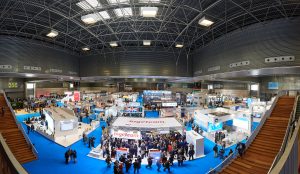
For as long as there has been a global wind industry, Husum, a town on Germany's North Sea coast between Hamburg and the Danish border, has been the venue for its leading trade fair. Yet Husum was showing the latest developments in wind turbine technology long before the industry went global...
Technology, innovation, training, and communication HUSUM WindEnergy is still the world's leading wind energy trade fair. This is pioneer country, where the industry's founders came together to show their groundbreaking work in a field of energy engineering belittled by the established energy sector and the political powers that be. And while the understanding of the climate situation in parts of the political arena is limited to littering every speech with climate catch
Poland – an overlooked offshore resource

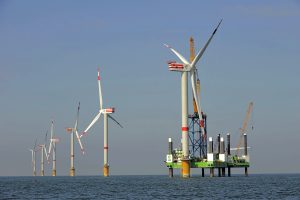
The first offshore wind park globally was installed in Denmark in 1991. Since then the offshore wind energy market has been developing slowly. Currently, majority of the installations in Europe are located in Denmark and the UK, countries that possess rich wind resources. There is no doubt that offshore installations offer higher productivity when compared with terrestrial turbines mainly due to higher wind speeds and more stable wind speeds. On average, wind speeds in the sea exceed 9-10m/s, which are significantly higher than average wind speeds of 6m/s on land.
Offshore wind energy development in Europe
Since 1991, the offshore wind power market has been developing moderately to reach slightly above 2,000 MW by the end of 2009, representing close
Page 2 of 79